
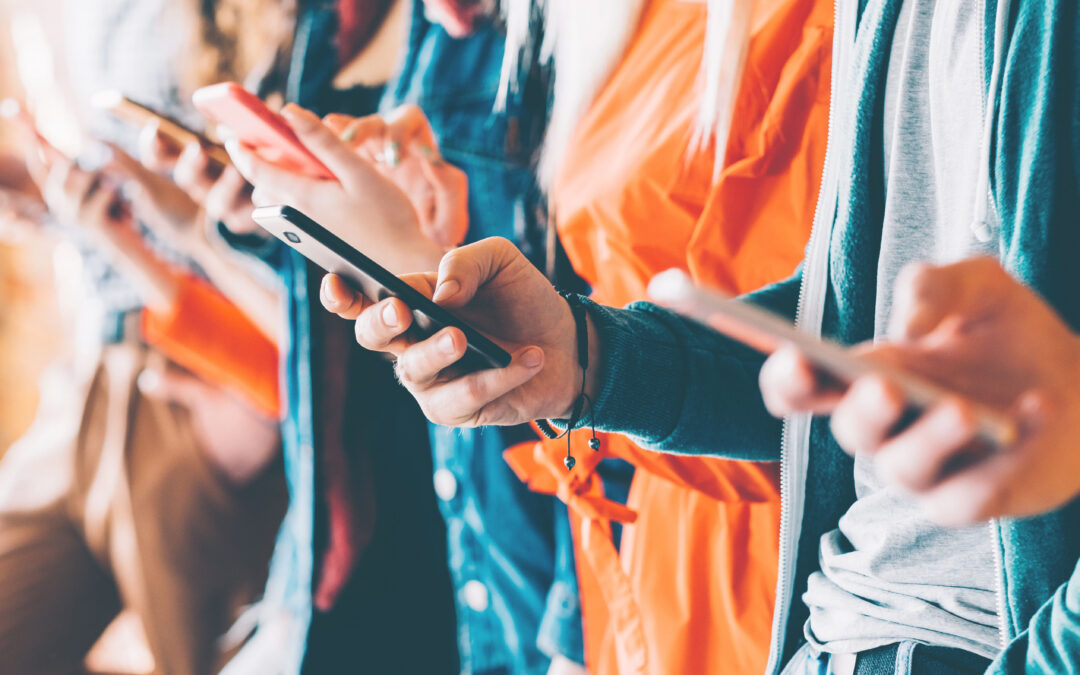
Social media platforms were initially framed as tools for connection—ways to maintain relationships, share information, and participate in public conversation. Over time, their role expanded. Social media now functions as a primary arena where status is displayed, norms are enforced, and belonging is negotiated.
This shift has reshaped how Americans experience social life. The effects are not limited to online behavior; they influence offline relationships, self-perception, and community dynamics in subtle but lasting ways.
From Interaction to Evaluation
In face-to-face communities, status cues were limited and localized. Social media introduced continuous, quantifiable feedback: likes, shares, views, and follower counts. These metrics transform interaction into evaluation, making social comparison more immediate and persistent.
Research shows that visible metrics heighten sensitivity to approval and rejection, particularly among adolescents and young adults. Even when users do not consciously seek validation, repeated exposure to performance-based feedback can shape behavior and self-worth.
Status becomes less about role or contribution and more about visibility.
Sources:
-
Pew Research Center, social media usage and well-being
-
Vogel, Erin et al., social comparison studies
-
American Psychological Association, adolescent media research
Shame in a Public Space
Social media also alters how shame operates. In offline settings, social sanctions were typically private, contextual, and temporary. Online, they can be public, permanent, and detached from local relationships.
Sociologists note that public shaming becomes more likely when norms are ambiguous and enforcement is decentralized. Without shared standards, individuals rely on signaling outrage to demonstrate alignment with perceived norms.
This dynamic affects not only those who are criticized, but also observers, who may self-censor or withdraw to avoid scrutiny.
Sources:
-
Ronson, Jon. So You’ve Been Publicly Shamed
-
Pew Research Center, online harassment studies
-
Goffman, Erving, stigma and social interaction theory
Belonging Without Proximity
One of social media’s most significant changes is the decoupling of belonging from physical proximity. Individuals can find communities based on interest, identity, or belief regardless of location.
This can be empowering, particularly for those who feel isolated locally. At the same time, online belonging often lacks the constraints that make offline communities durable—shared responsibility, long-term accountability, and mutual dependence.
As a result, belonging can become conditional and unstable, tied to ongoing affirmation rather than sustained commitment.
Sources:
-
Putnam, Robert, digital-era social capital research
-
Pew Research Center, online communities surveys
-
Harvard Kennedy School, civic engagement studies
Status Anxiety and Self-Presentation
Social media encourages continuous self-presentation. Profiles function as curated narratives, emphasizing achievements, experiences, and moral positioning. Over time, this can intensify status anxiety, as individuals compare their backstage realities to others’ front-stage performances.
Research links heavy social media use with increased anxiety and depressive symptoms, though causality varies by individual and context. The effect appears strongest when platforms are used for comparison rather than communication.
In this environment, belonging is often measured by recognition rather than relationship.
Sources:
-
Twenge, Jean, and Jonathan Haidt, adolescent mental health studies
-
APA, social media and anxiety research
-
Pew Research Center, platform use patterns
The Spillover Into Offline Life
The norms developed online increasingly shape offline interactions. Workplace communication, friendship dynamics, and civic discourse reflect heightened sensitivity to tone, visibility, and reputation.
People may avoid expressing uncertainty or nuance for fear of misinterpretation, reducing opportunities for learning and dialogue. At the same time, moral and social signaling can replace deeper engagement, offering clarity without connection.
This spillover contributes to the broader sense of social fragility documented in surveys on trust and belonging.
Sources:
-
Pew Research Center, trust and social cohesion studies
-
Shorenstein Center, digital media and discourse research
-
National Institute of Mental Health, social stress studies
Navigating a Rewired Social Landscape
Social media did not invent status, shame, or belonging, but it amplified and accelerated them. The challenge is not to eliminate these dynamics, but to understand how platform design and social norms interact to shape behavior.
Research suggests that healthier outcomes are associated with intentional use: smaller networks, private communication, and reduced emphasis on metrics. More broadly, restoring belonging may require strengthening offline institutions that offer recognition without constant evaluation.
In a society where social life is increasingly visible and quantified, learning how to balance expression with restraint—and connection with privacy—has become an essential social skill.